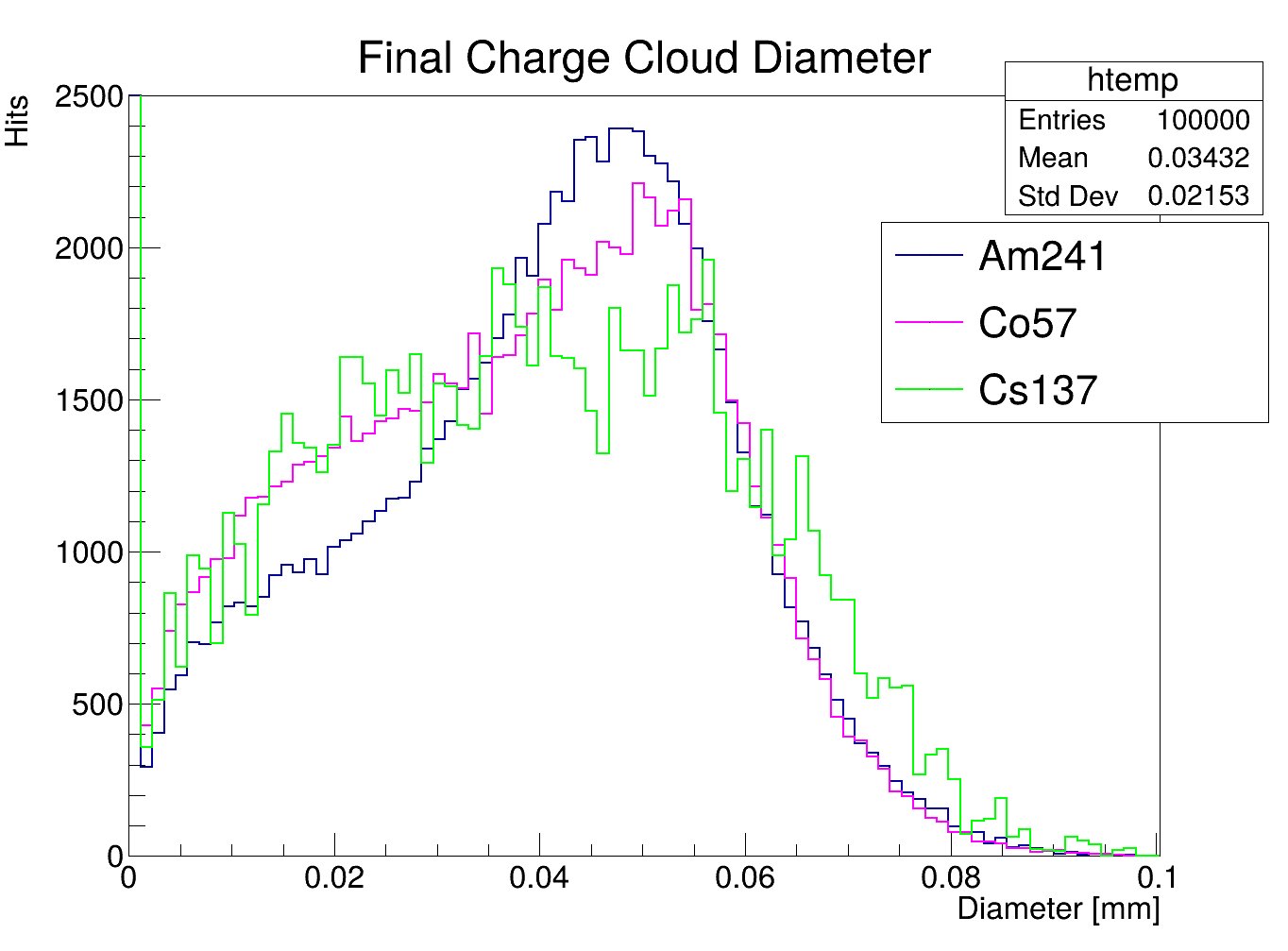
I am looking to estimate the final charge cloud after diffusion/propagation. I used the PropagatedCharge object to get the halted charges at the sensor and estimated it that way, but it seems that when I change the source energy it does not really change that much. I expected higher gamma ray energy leads to higher gamma ray penetration showing a smaller diameter (shorter time to diffuse and propagate). Would changing the electric field have a higher impact? Attached is my macro for reference and simulation configuration files. Thanks!
generate_particles.conf (1.4 KB)
minipix_tpx3_flex.conf (605 Bytes)
detector.conf (223 Bytes)
Am241source.mac (1.2 KB)
Co57source.mac (1.2 KB)
Cs137source.mac (1.2 KB)
final_charge_cloud.txt (6.4 KB)
I have used the PropagatedCharge object to grab charge carriers that have been collected/halted at the anode using the getState() method. Then I just calculated their distances from each other to get the diameter of the charge final charge cloud at charge collection.
Hi @oobie2142 ,
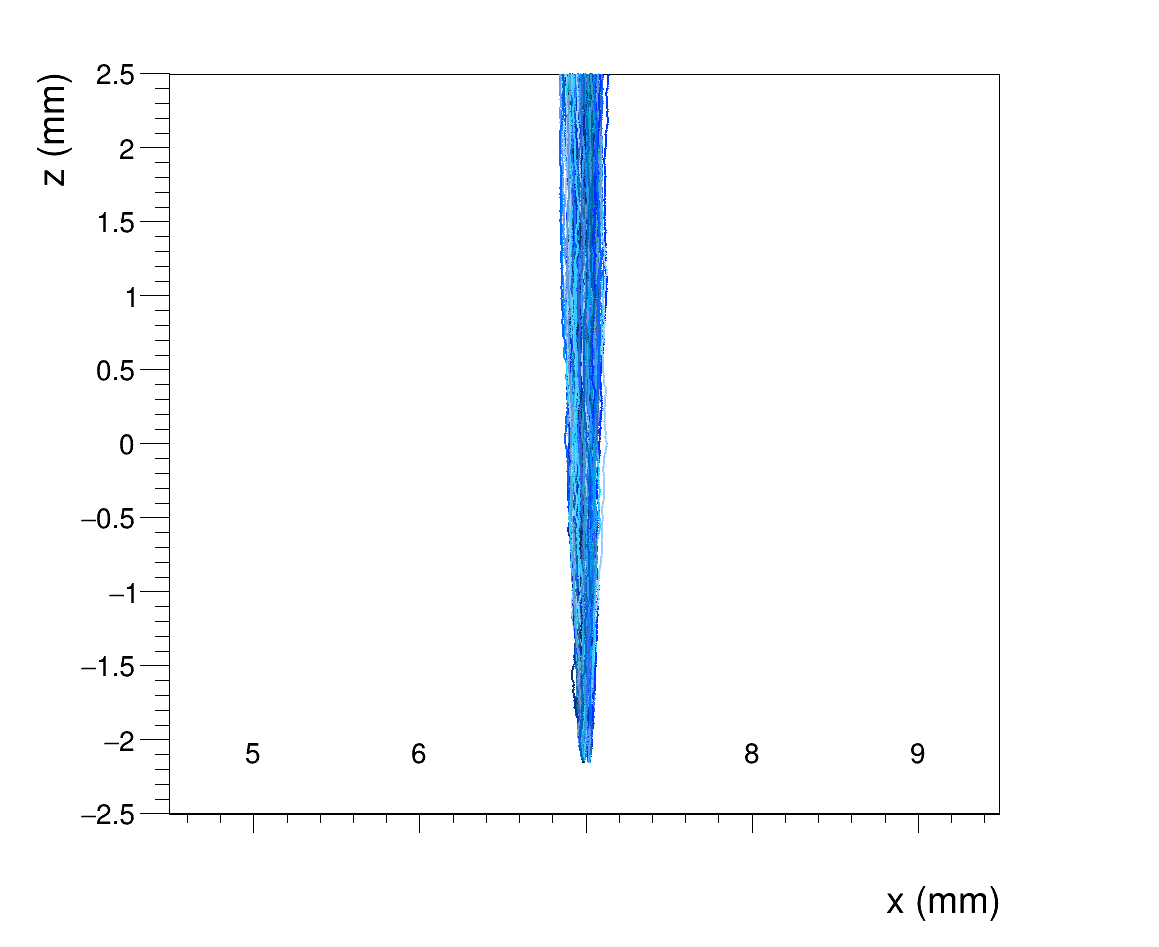
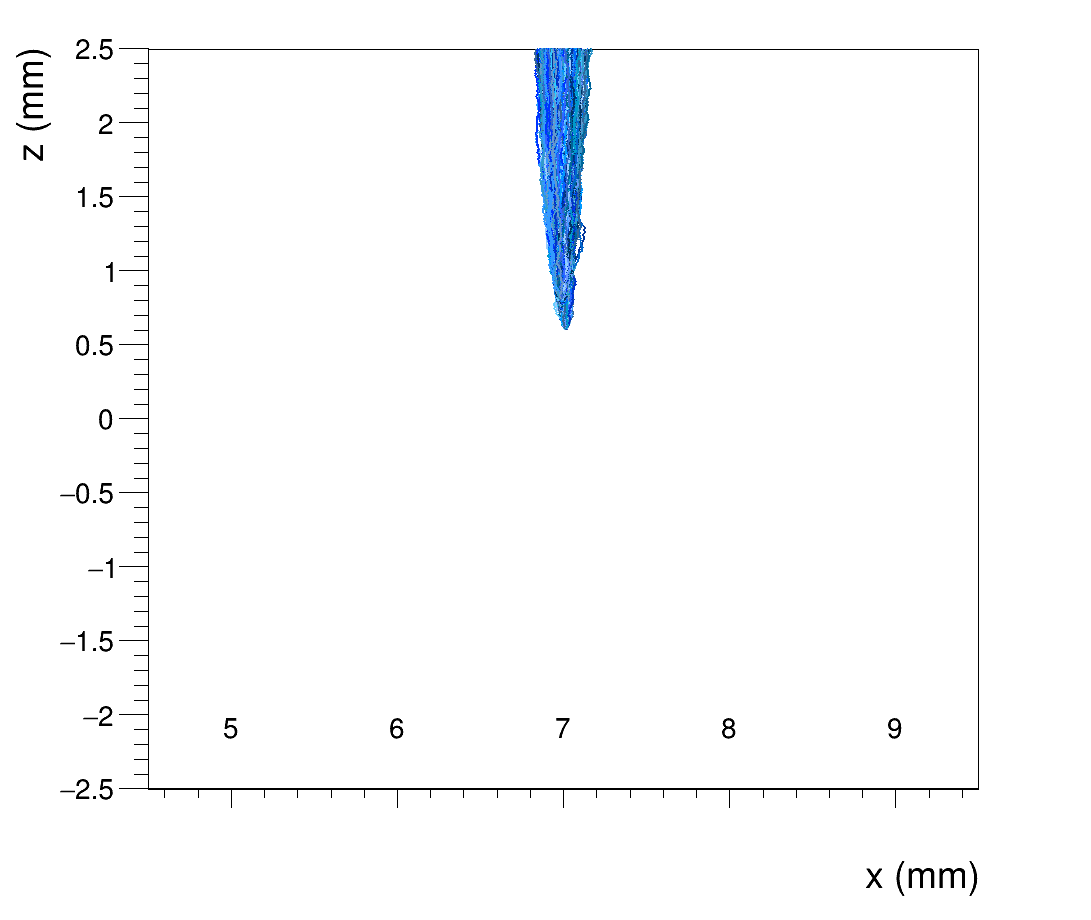
I think the high electric field is the main thing. You can have a look at some linegraphs (output_linegraphs = true in the propagation module) and see this. There is just not much diffusion even when the interaction happens near the bottom of the sensor. This for your Co-57:
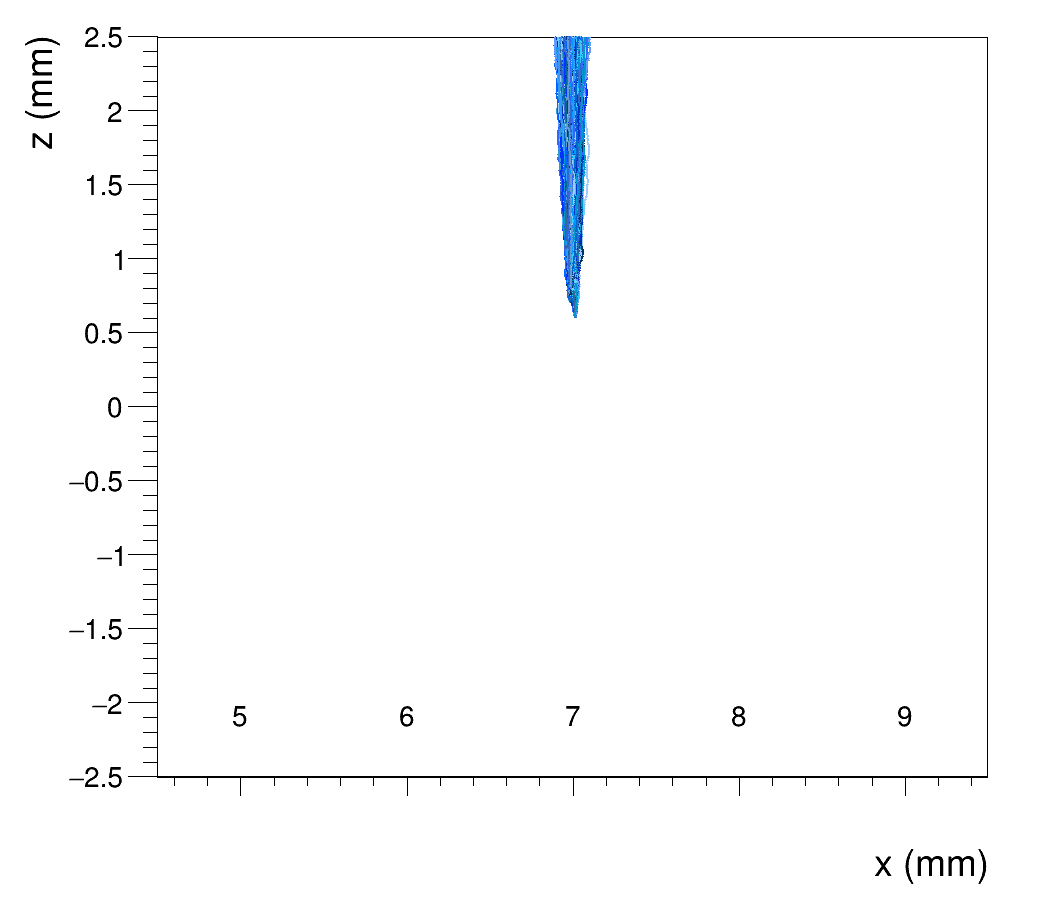
And this for for Cs-137:
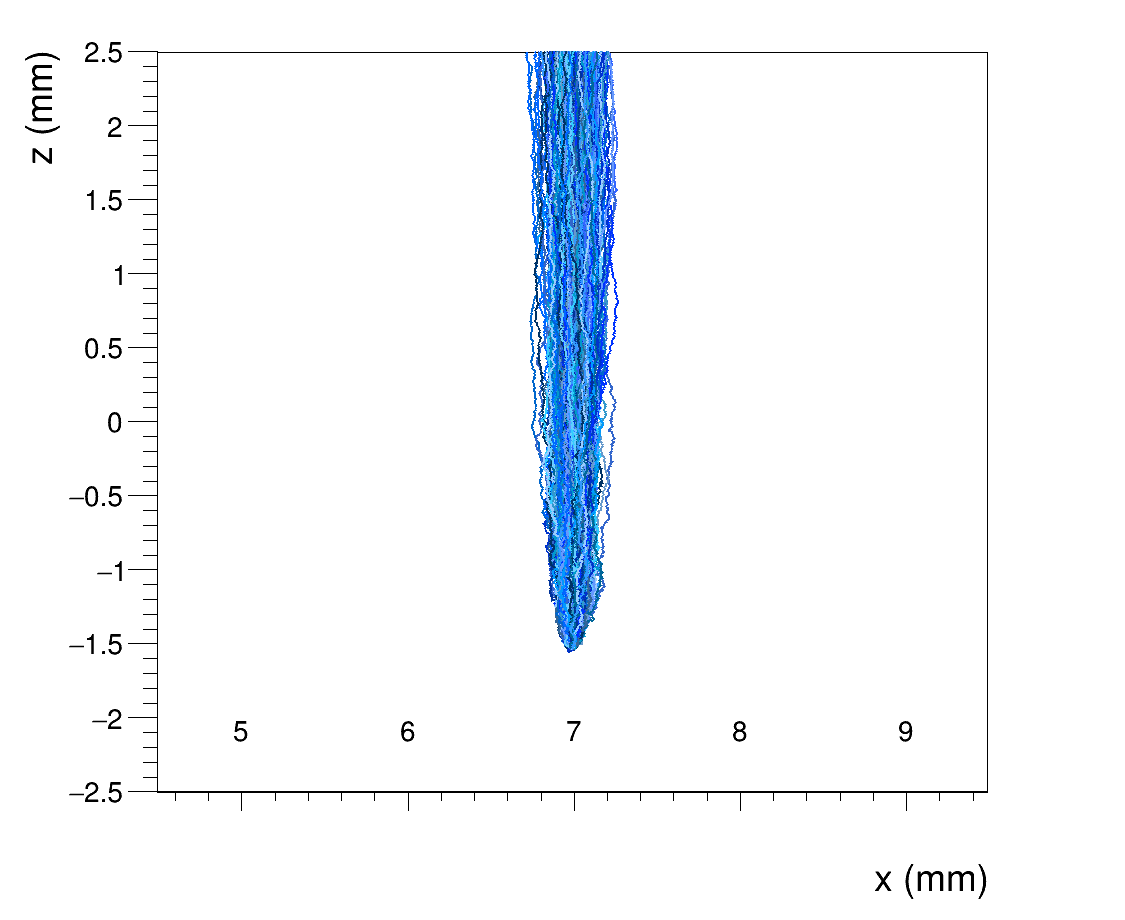
These are just example events, but try it with a smaller electric field and the effect will be significantly bigger. This with bias_voltage = -100V, Co-57:
Cs-137:
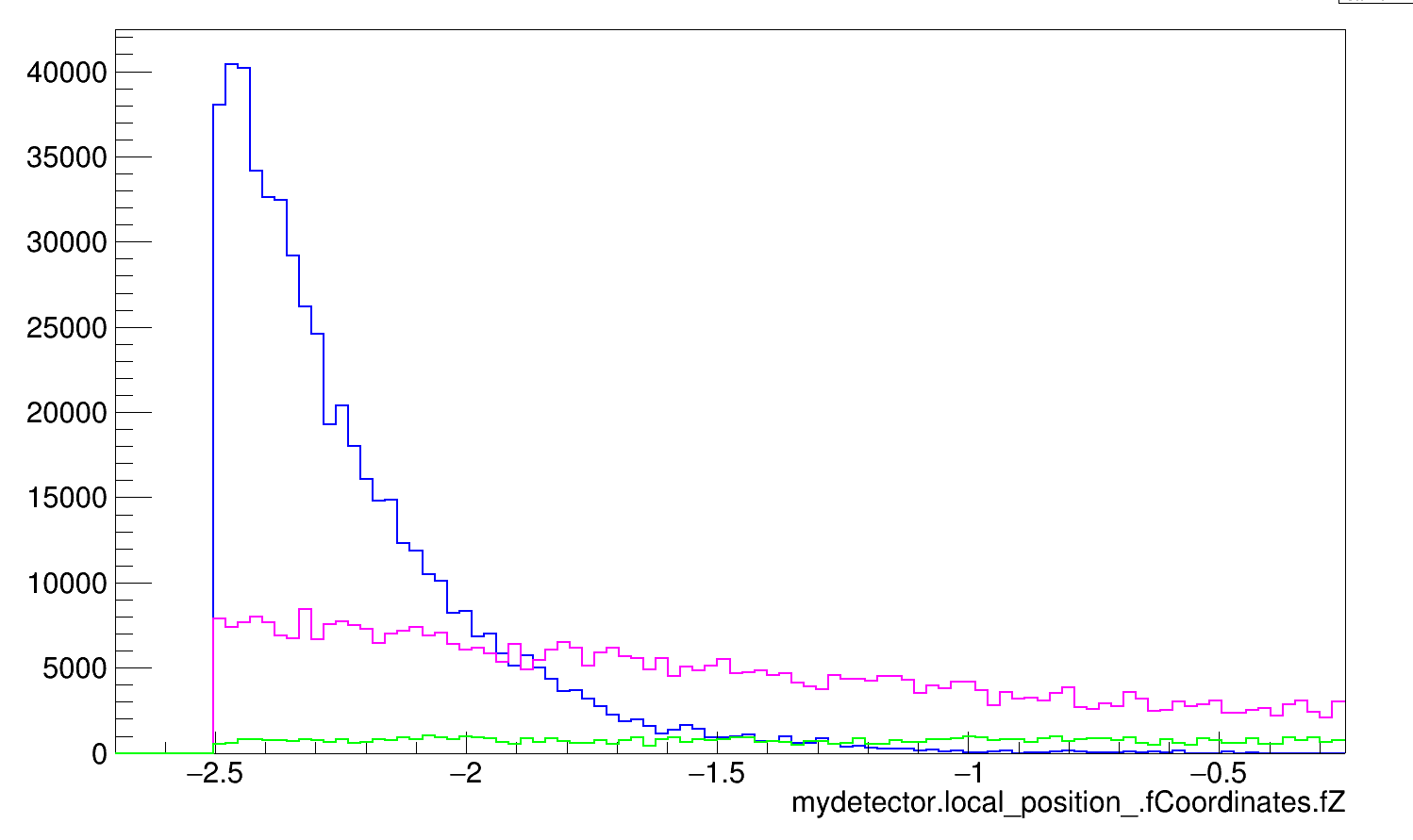
The deposit works as expected, here’s a plot looking at the deposit location for the different sources, same colour legend as your plot:
So, if you want to see the difference clearer, play with the electric field a bit!
Kind regards,
Håkan
Excellent thanks @hwennlof I will try it!