Hello @simonspa,
Sorry I was not able to find the edit option to change the plots in my previous post  . I’ll post the message once again here. Hopefully all the plots can be seen properly now. Apologies for posting twice.
Hello all,
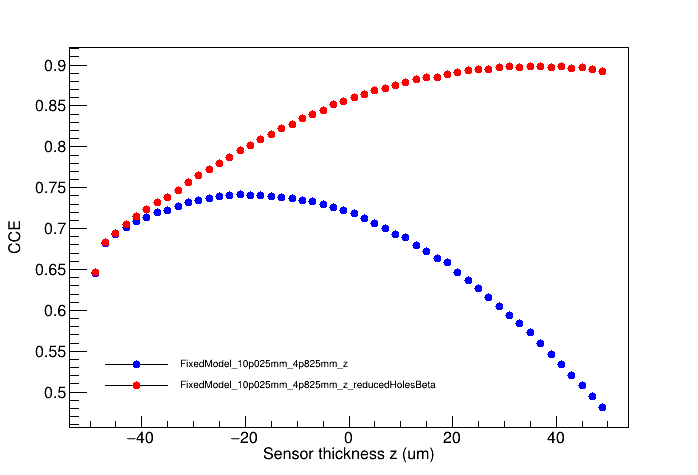
Following the nice and helpful discussion on CCE vs Z in an irradiated detector in the above thread, we tried to do a couple of more studies to understand if the drop in CCE observed towards the pixel side is due to the strong trapping of holes on their way to the backside. In the first test, we reduced the beta values of the holes to reduce the hole-trapping rate. We observed an improvement in CCE to about 42% as you can see in the plot attached below:
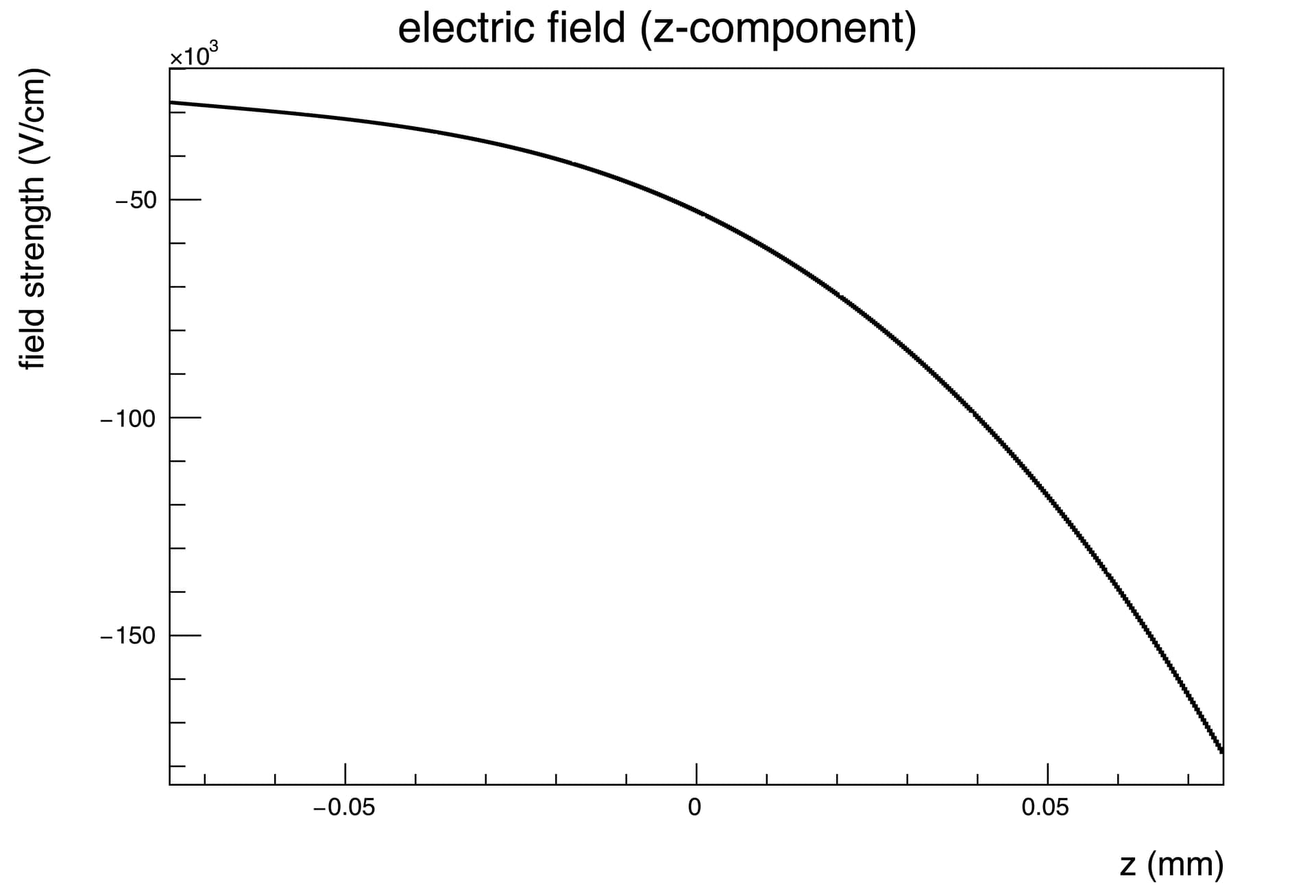
The hypothesis here was that the reduced E-field close to the pixel implants results in lower mobility for the holes created close to pixel implants thereby increasing the probability of holes getting trapped subsequently resulting in lower CCE. To test the effects of low E-field close to the pixel implants, we tried to fit a pol3 to the Z projection of E-field from AP2 using TCAD E-field excluding the low Efield regions and used this pol3 with the fit parameters to use the custom model for [ElectricFieldReader] in AP2. The custom(pol3) E-Field and CCE vs Z using TCAD E-Field and the custom (pol3) E-Field are shown below:
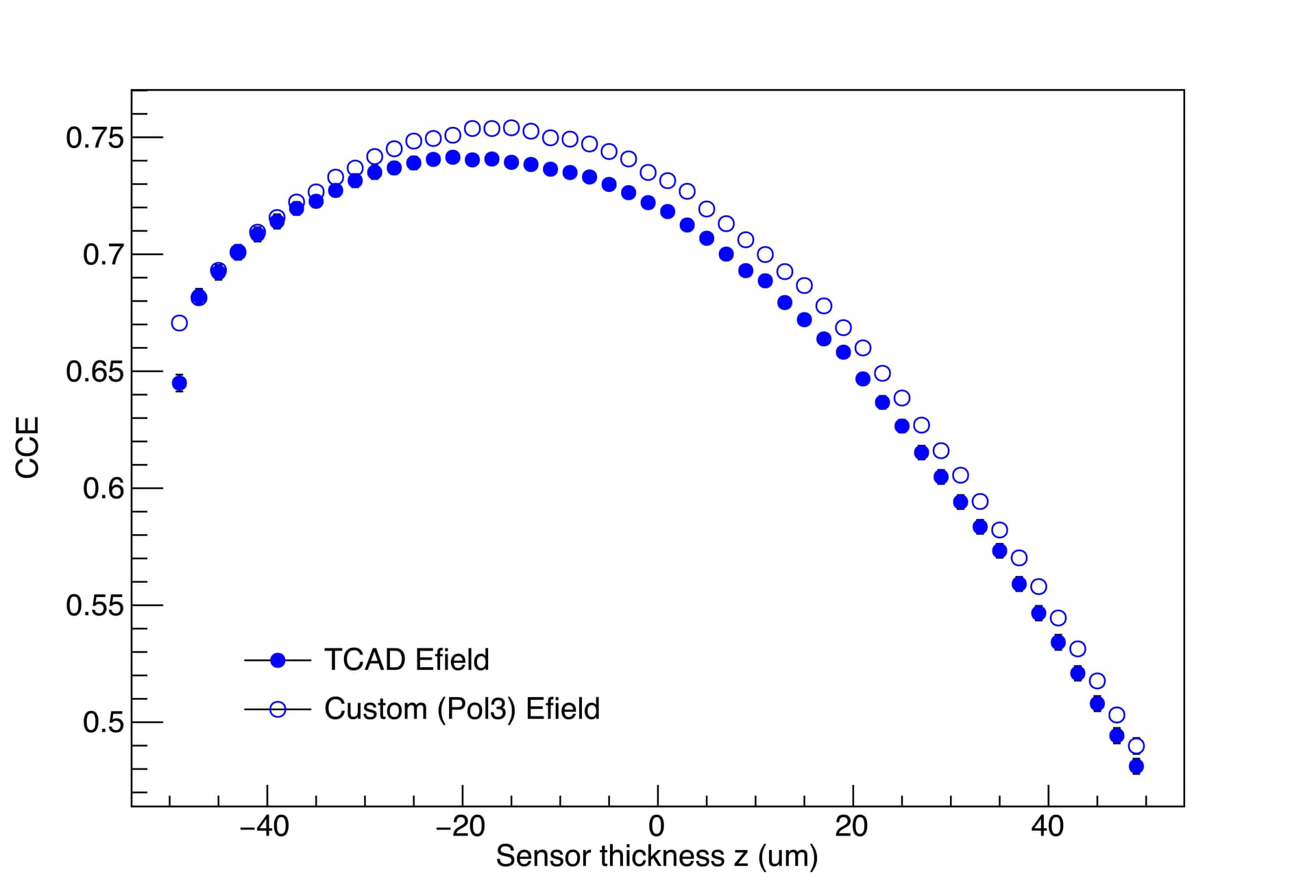
As you can see from the CCE vs Z plot, the effect of low E-field close to the pixel implants seems very small and this is something that we are not able to completely understand.
For the next test, we tried to look at the CCE vs Z using the ramp potential. The CCE is here estimated by weighing each bin of PropagatedZ position with the corresponding Ramo potential value. The CCE vs Z distributions computed using Ram potential and using Pixel total charge is attached below:
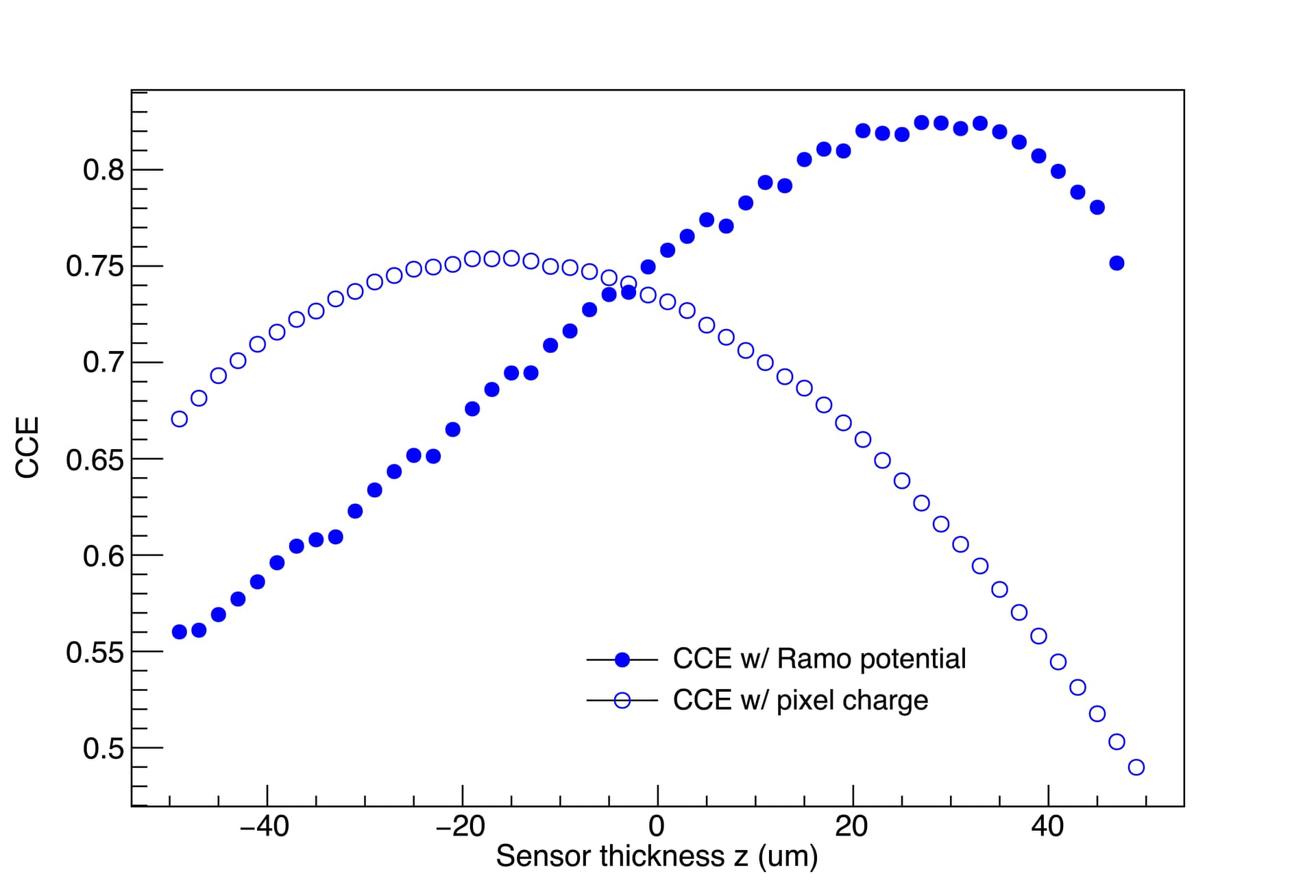
In principle, we were expecting both distributions to show a similar trend. It’d be great if you can possibly help us understand what we are doing wrong here.
Thanks a lot,
@mbomben and Keerthi